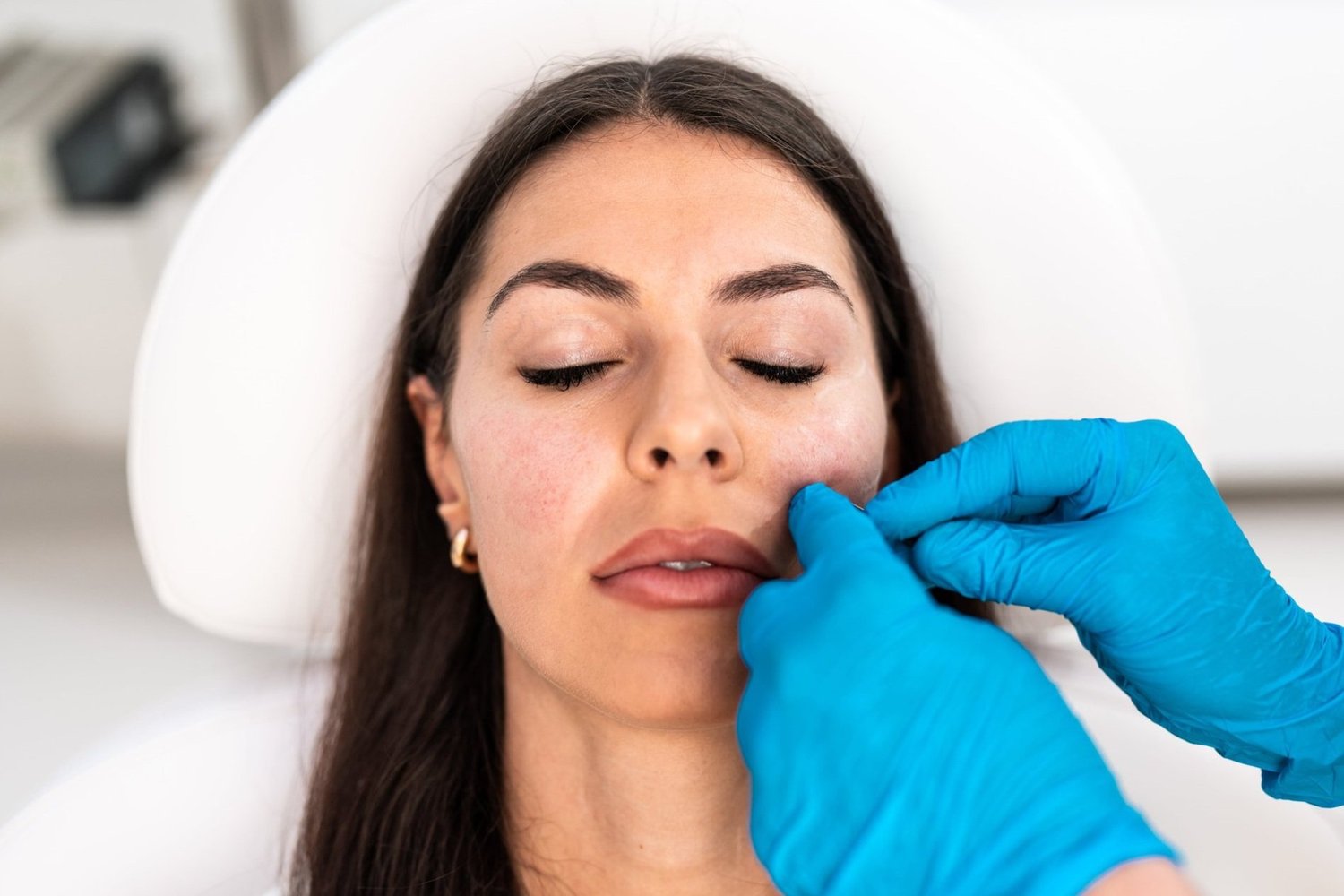
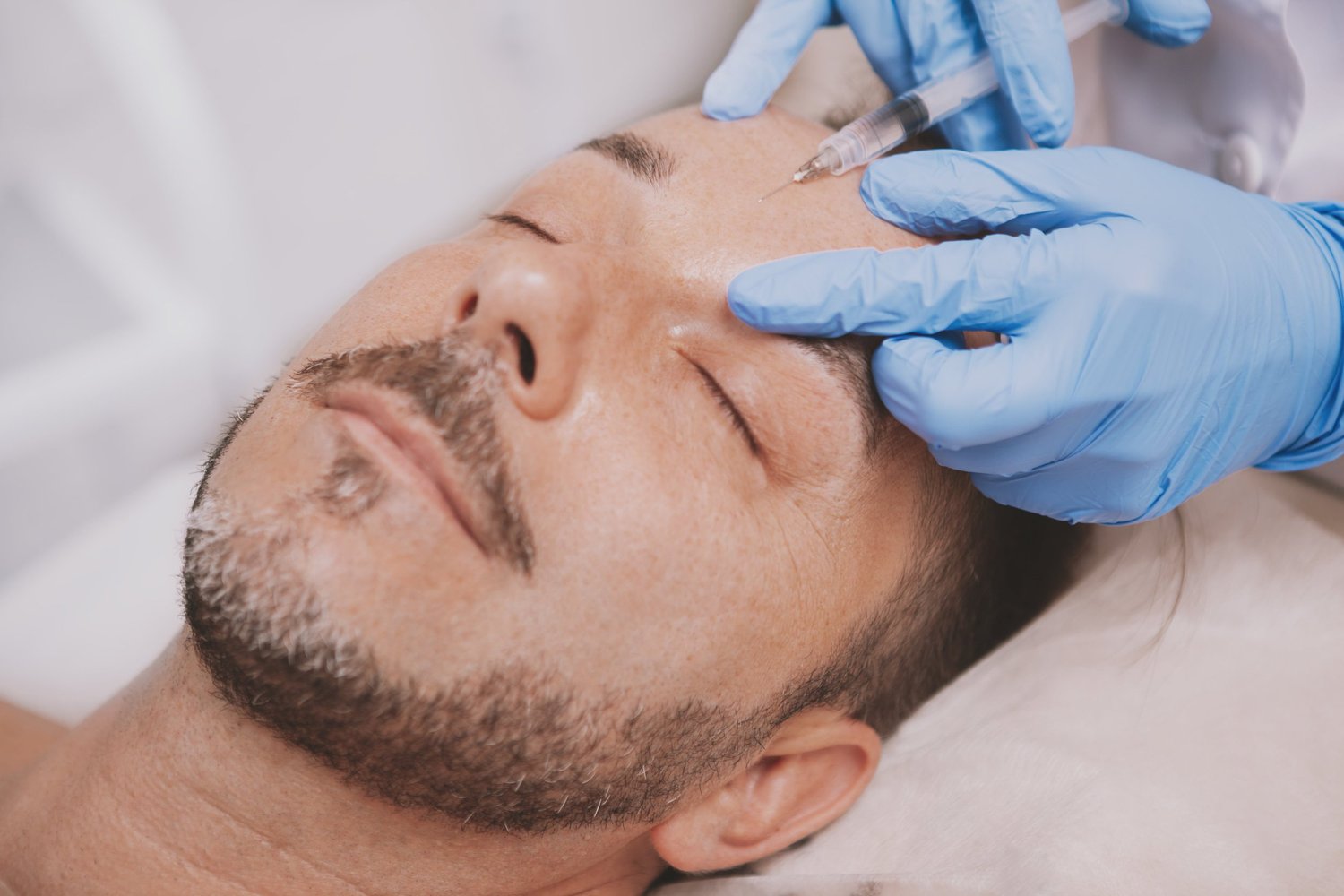
Anti-wrinkle injections temporarily soften the muscles responsible for dynamic facial lines. At our Southampton clinic, every treatment starts with a thirty-minute consultation (£30, taken off your first treatment), measurement of the muscle in motion, and a conservative starting dose. Most patients see the effect take hold around day five and find that results last between three and four months. Pricing and booking are on Fresha.
Most of the patients who arrive in Bursledon for anti-wrinkle injections have done their homework. They have scrolled through before-and-afters, read a glossary of brand names, and probably formed an opinion about how many units they think they need. We always say the same thing back. The dose is not the first conversation. The first conversation is about the muscle, and whether we should be treating it at all.
This article is the longer version of that first conversation. It is written for anyone in Southampton, Hampshire, or further afield who is thinking about anti-wrinkle injections in Southampton for the first time, and would prefer to walk in already knowing what is going to happen, what it will feel like, and what we will tell them no to.
What anti-wrinkle injections actually are
We don't name products on this website, which is why we refer to it simply as anti-wrinkle treatment. It is a purified protein that temporarily prevents the targeted muscle from contracting at full strength. It does not paralyse the face. It does not freeze the face. It softens the signal between the nerve and the muscle, and only in the precise spots we inject.
That distinction matters because the muscle is still your muscle. You will still raise your eyebrows. You will still frown. You will simply do it with less force, which means the overlying skin creases less, which means the dynamic line that bothered you reduces. Static lines, the ones that are visible at rest, take longer and sometimes require a different treatment plan entirely.
The thirty-minute consultation, properly explained
The consultation is the single most important part of the appointment, and the part most clinics rush. Ours runs to thirty minutes. It costs £30, which comes off your first treatment if you go ahead. We spend roughly the first twelve minutes on history. Medical, surgical, allergies, current medications, anything previously injected and where, and whether there is a specific event you are heading towards.
We then spend the next ten minutes with you upright in good light, watching how your face moves. We ask you to frown gently, frown hard, raise your eyebrows in surprise, then squint as if reading something in the sun. We are not yet talking about dose. We are mapping which muscles are doing the work, where they fatigue, and where the overlying skin folds against them.
What we are looking for
Three things, in order. First, whether the line is dynamic, static, or both. Second, whether your muscle is naturally strong or naturally weak in that area, because the strongest muscles need the most measured hand. Third, whether the lines you are pointing at are actually the ones bothering you, or whether something adjacent is the real concern. It is not uncommon for a patient to ask about forehead lines and leave having decided to treat the frown lines underneath them first.
The remaining eight minutes are about you. What you have tried, what you have read, what you are hoping for, and any treatment you have explicitly ruled out. If we have time, we will also walk you through the recovery and aftercare so that nothing on the day is a surprise.
The treatment itself
Once you decide to proceed, the actual injections take between three and six minutes. The needle is the smallest gauge we can use clinically, the depth is shallow, and the placement is precise. Most patients describe a sharp scratch on the first injection and barely register the rest. There is no need for topical numbing for the majority of patients, though we are happy to apply it if you would prefer.
We measure the muscle before we measure the dose. The patients who look natural after are almost always the patients who started with less than they thought they needed.Krystian Woloszyk · Lead clinician
Immediately after each injection you will see a small raised bump at each site. These are not bruises. They are simply the volume of fluid we just placed into the muscle, and they settle by themselves within twenty to forty minutes. A small percentage of patients get a true bruise, particularly if they have taken ibuprofen, aspirin, or fish oil supplements in the previous week. Make-up can be applied four hours later if a bruise does appear.
What to expect in the first two weeks
Nothing visible happens for the first four to five days. The medicine binds to its target slowly, and the muscle continues to contract during that window. Around day five, most patients notice that frowning feels less powerful. By day ten, the upper face has reached its working position and the overlying skin starts to settle smoother. We always book the follow-up review for fourteen days, never earlier, because a face that looks beautifully balanced on day eight can shift slightly by day twelve and we want to see the final picture before we decide whether anything needs adjusting.
The fortnight review
The review is short, free, and one of the reasons we book it into every plan. We look at the same expressions we mapped at the consultation, and we either close the appointment confirming everything has landed evenly, or we add a tiny top-up of one to four units to balance the right side against the left. This is the appointment that makes the difference between a treatment that looks done and a treatment that looks like nothing at all happened. Most clinics charge for it. We never have.
How long it lasts and how to space treatments
For most patients the effect holds for three to four months, then fades over a further month. After a sequence of three or four treatments spaced four months apart, the muscle learns the new resting position and many patients comfortably extend the gap to five or six months. We always advise booking the next appointment around the three-month mark for the first year, then loosening the schedule as you understand your own metabolism of the medicine.
If you would like to combine anti-wrinkle injections with a hydration treatment such as Profhilo and skin boosters in Southampton, or you are also thinking about volume restoration through dermal fillers in Southampton, we will plan those across separate appointments rather than on the same day. The reason is simple. Each product has its own settling time, and treating one at a time keeps the assessment honest and the recovery clean.
What we will say no to
Saying no is part of the job. We routinely turn down requests to treat the same areas at the same dose every time, because the muscle adapts. We turn down anyone who has had anti-wrinkle injections elsewhere within the last twelve weeks. We decline anyone who is pregnant or breastfeeding, anyone with an active infection or rash in the treatment area, anyone with a confirmed allergy to the protein or its excipients, and anyone with certain neuromuscular conditions. These are not policy preferences. They are the conditions written into the prescribing information, and they are not negotiable.
We will also gently steer patients away from anti-wrinkle injections altogether if what they have described is better answered by something else. A patient asking to treat forehead lines that are actually heavy upper eyelids is the most common example. The answer there is rarely more medicine and almost always a referral to an oculoplastic surgeon for a brow assessment.