PRF in Southampton.The next generation of platelet therapy.
A fibrin scaffold, formed from your own blood, that releases growth factors across weeks rather than hours.
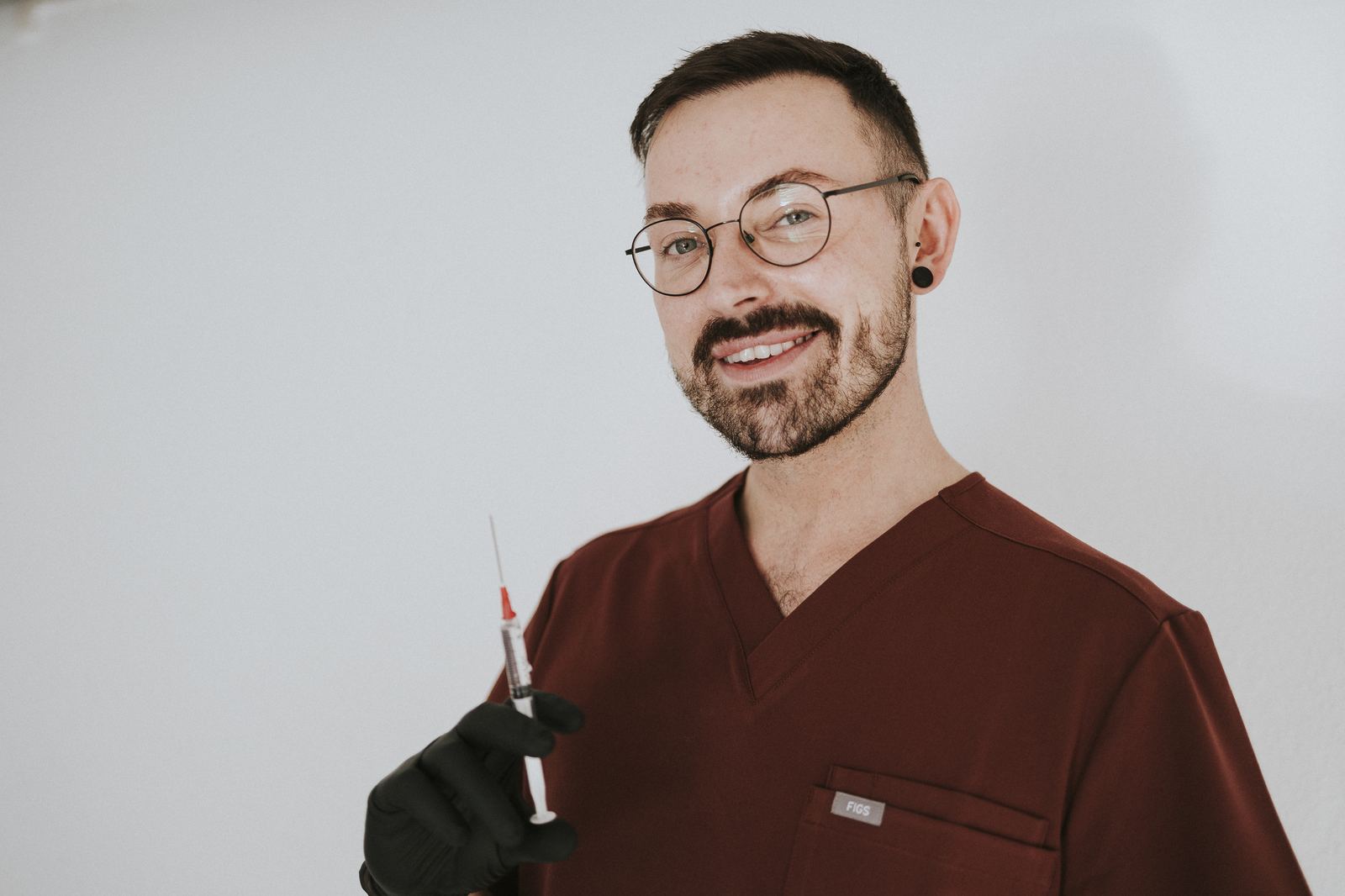
- Session length
- 45-60 minutes
- Course
- 3 sessions, 4-6 weeks apart
- Results read
- Gradually from 4-6 weeks
- Downtime
- Redness 24-48 hours
PRF, or platelet-rich fibrin, is an advanced autologous treatment that uses a concentrated fibrin matrix derived from the patient's own blood to deliver a slow, sustained release of growth factors into the skin, offered at Skin Aesthetics by Krystian in Bursledon, Southampton in appointments of 45 to 60 minutes that include the blood draw and centrifugation, with results building gradually from four to six weeks across the course, 24 to 48 hours of redness as typical downtime, and suiting patients looking for meaningful improvement in skin quality and density using a completely additive-free autologous approach.
Pricing and booking are on Fresha, kept in one place so it is always current.
A fibrin scaffold. Growth factors, released over weeks.
Platelet-rich fibrin is the next stage of development from platelet-rich plasma, and the distinction matters clinically. In standard PRP processing, an anticoagulant is added to the collection tube to prevent the blood from clotting during centrifugation. This keeps the platelets suspended but also prevents fibrin from forming. PRF uses a tube with no additive, which allows the natural clotting cascade to begin during centrifugation. The result is a product that contains not just concentrated platelets, but a fibrin network, a three-dimensional scaffold of protein fibres that holds the platelets and growth factors within its structure.
The clinical consequence of this difference is in the release kinetics. Growth factors in a standard PRP preparation are released rapidly and are largely expended within the first few hours after placement. The fibrin matrix in PRF acts as a slow-release reservoir, allowing growth factors to be delivered to the surrounding tissue over a period of days to weeks rather than hours. This extended release is thought to produce a more sustained stimulus to collagen synthesis and tissue repair, which is reflected in the improved outcomes documented in comparative studies of the two techniques.
The periorbital area. Where PRF has particular clinical value.
The skin around the eyes is among the thinnest on the body, and it responds poorly to many injectables because the risk of swelling, bruising, and the Tyndall effect from misplaced product is higher in this area than elsewhere. PRF is well suited to periorbital treatment because it is completely biocompatible, carries a very low risk of product-related discolouration, and can be placed very superficially to target the fine crepey quality of the skin immediately below the eye. It does not add volume in the way that a filler does, so it is appropriate for patients whose concern is skin quality and fine lines rather than loss of volume in the tear trough, which is a separate indication addressed with filler.
Processing temperature affects PRF quality, and Krystian maintains a specific protocol to prevent premature activation of the fibrin during preparation. The product is placed within a short window after centrifugation to preserve the structural integrity of the fibrin scaffold. These are the details that distinguish a well-run PRF treatment from one that is processed carelessly, and they are not visible to the patient but are significant to the outcome.
PRF suits patients whose primary concern is skin quality: texture, density, fine lines, and the general loss of vitality that characterises ageing skin. It is a particularly good option for patients who want a completely additive-free autologous protocol, or for those who have found that standard PRP produced a good but short-lived result and want to explore a sustained-release alternative. It works well as a standalone protocol and also in combination with microneedling, which improves the penetration of the PRF into the dermis.
Three things before your first session.
Which platelet protocol suits your concern, medication review, and realistic result timelines are all discussed at consultation.
PRF versus PRP: which is right
The choice between PRF and PRP depends on the specific concern, the treatment area, and the patient's history with platelet therapy. PRF is generally preferred where a more sustained growth factor release is desired, where the periorbital area is being treated, or where an entirely additive-free protocol is important. Krystian will discuss both options at consultation and make a clear recommendation rather than leaving the choice to the patient alone.
Medication and supplement review
Because PRF processing relies on the blood's natural clotting function, patients taking long-term anticoagulant medication present a more complex picture than for standard PRP. The fibrin network may not form adequately if clotting is pharmacologically suppressed. This is reviewed at consultation and does not automatically exclude a patient from treatment, but it changes the discussion about which approach is most appropriate.
Realistic timeframe for results
PRF produces a gradual biological stimulus, not an immediate cosmetic result. The improvements in skin quality become visible from four to six weeks after the first session and build across the course of three treatments. Patients assessing their result at two weeks post-session are unlikely to have seen the full effect. The correct evaluation point is three months from the first treatment, at which point the full course will have been completed and the tissue response will have had time to establish.
Fifty minutes, from draw to placement.
The same appointment contains the blood draw, centrifugation, and treatment, without any product leaving the clinical environment.
Arrival and consent
Medical history is reviewed, consent confirmed, and clinical photographs taken. The session protocol is confirmed, and any questions from the period since consultation are addressed before the draw begins.
Blood draw
A small volume of blood is drawn from the antecubital vein using a sterile PRF-specific additive-free collection tube. Handling temperature and technique are maintained to prevent premature fibrin activation before the tube reaches the centrifuge.
Centrifugation
The sample is centrifuged at the protocol settings appropriate for PRF production. The fibrin matrix forms during this phase, separating from the red cell layer. While the sample processes, the treatment area is prepared, and topical numbing is applied where indicated.
Placement
The PRF is drawn from the processing tube immediately after centrifugation and introduced into the treatment area by microinjection or microneedling pass, depending on the agreed protocol. After placement, the result is reviewed and aftercare is given. The next session is scheduled before you leave.
The honest version.
The questions every patient is too polite to ask out loud. Read at your pace.
What makes PRF different from PRP?
The key difference is in the processing tube and what that allows to happen during centrifugation. Standard PRP uses an anticoagulant additive to keep the platelets suspended, which prevents a fibrin network from forming. PRF uses no additive, allowing the blood to begin clotting naturally during centrifugation and producing a fibrin scaffold that holds the platelets and growth factors in a slow-release matrix. The practical effect is a more sustained stimulus to the tissue over days and weeks rather than hours.
Is PRF safe?
PRF is entirely autologous, meaning it is derived from your own blood with no synthetic additives. The risk of allergic or immune reaction is therefore effectively absent. The risks are those of any injection procedure: bruising, swelling, and discomfort, all of which are transient. The processing protocol maintains sterility throughout, and the product is never exposed to anything external to the clinical environment during preparation.
How many sessions will I need?
A course of three sessions at four-to-six-weekly intervals is the standard recommendation. This allows each session's growth factor stimulus to build on the response generated by the previous one. A single session will produce some benefit, but the course of three produces meaningfully better outcomes, which is why it is always the starting recommendation. Annual or twice-yearly maintenance sessions sustain the result thereafter.
Can PRF be used around the eyes?
Yes. The periorbital area is one where PRF has particular clinical value, because it is completely biocompatible, carries a very low risk of product-related discolouration, and can be placed very superficially to target the fine texture and crepiness of the lower eyelid skin. It does not address volume loss in the tear trough, which is a separate concern treated with dermal filler; it addresses the quality of the overlying skin itself.
Where can I see the pricing?
Pricing and booking are on Fresha. The reserve-your-consultation button on this page takes you directly there.
What we tell you before we begin.
- BruisingPossible at injection points and the blood draw site; typically resolves within seven days.
- Redness and swellingExpected for 24 to 48 hours post-treatment in most patients.
- DiscomfortMicroinjection produces a stinging sensation across the treatment area; topical numbing is used where appropriate.
- Inadequate fibrin formationIn patients with clotting suppression, the PRF matrix may not form to full quality; this is reviewed at consultation.
- ExclusionsPregnancy, breastfeeding, blood-clotting disorders, anticoagulant therapy (assessed individually), haematological malignancy, active skin infection in the treatment area, and severe anaemia.
The consultation is where Krystian reviews your health history and will give an honest assessment of whether PRF is the best route for your specific concern, or whether an alternative approach would serve you better.
Reserve your consultation.
If you are interested in improving your skin quality through a completely additive-free autologous protocol, the consultation is the right place to begin. It is £30, taken off your first treatment, held at the clinic in Bursledon by appointment, and without any obligation to proceed.