IV drips.Direct infusion. Nothing lost in transit.
A complete formulation, delivered where the body can use it immediately.
- Session length
- 30 to 60 minutes
- Absorption
- Delivered directly into the bloodstream
- Results
- Typically felt same day
- Downtime
- None; brief clinic rest post-infusion
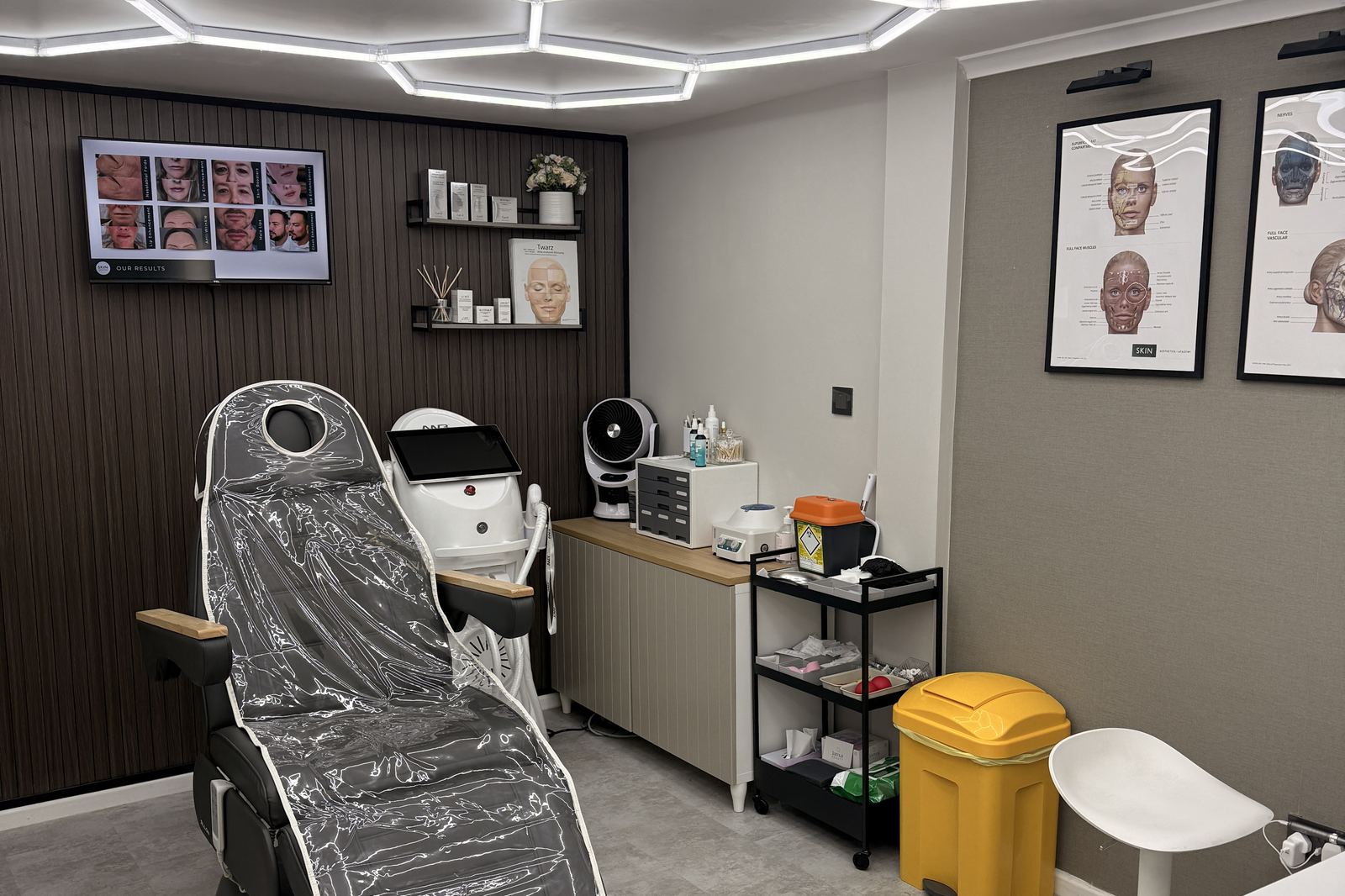
IV drip therapy delivers a bespoke combination of vitamins, minerals, and amino acids directly into the bloodstream, achieving one hundred per cent bioavailability from the moment of infusion. Unlike oral supplements, which pass through the gastrointestinal system and lose a significant proportion of their concentration before reaching systemic circulation, intravenous delivery bypasses the gut entirely. Sessions take thirty to sixty minutes in a supervised clinical setting, with effects often noticeable the same day. Treatment is available by appointment at Skin Aesthetics by Krystian, 15 Old Bridge Cl, Bursledon, Southampton SO31 8AX.
Pricing and booking are on Fresha, kept in one place so it is always current.
Straight to the bloodstream. Every milligram counts.
Intravenous infusion places nutrients directly into the venous circulation, from where they are distributed throughout the body without the losses associated with oral or even intramuscular delivery. The clinical significance of this varies by nutrient and by patient: Vitamin C at oral doses is limited by intestinal transport saturation; intravenous administration can achieve plasma concentrations ten to twenty times higher than the oral ceiling, which is relevant to its role in collagen synthesis and immune function. Magnesium absorbed orally may cause gastrointestinal discomfort at therapeutic doses; intravenously it is tolerated well and reaches target tissue without the digestive barrier. The intravenous route is not a luxury add-on to oral supplementation; it is a clinically distinct delivery mechanism with different pharmacokinetics.
Formulations are bespoke. A single standard drip prescribed identically to every patient reflects a retail model, not a clinical one. At Skin Aesthetics by Krystian, the infusion composition is discussed at consultation and designed around you after a health review. Common components include high-dose Vitamin C, B-complex vitamins, magnesium, glutathione, zinc, and saline base. The volume and concentration of each component is selected for your goals and adjusted across a course as your response is assessed.
The consultation is where the formulation begins.
A good intravenous infusion programme starts with a conversation about your health history, current diet, any diagnosed deficiencies, and your goals. Where recent blood work is available, it informs the formulation precisely. Where it is not, Krystian will advise on the most appropriate general protocol as a starting point and may recommend testing to refine subsequent sessions. The infusion is administered in a supervised clinical setting, with Krystian present throughout, and a brief period of rest post-infusion before you leave.
IV drips are appropriate for patients seeking to address functional nutrient insufficiency, support recovery from illness or physical demand, prepare for or recover from aesthetic procedures, or maintain high-performance nutrition at a level not achievable through diet and supplementation alone. They are not a substitute for medical investigation of symptoms that suggest an underlying cause, and Krystian will say so directly when that is the appropriate recommendation.
Three things the formulation depends on.
An IV drip is only as good as what is in it and why. These are the considerations Krystian works through before confirming your protocol.
Formulation and goals
The composition of each infusion matters. A generic, one-size drip may contain nutrients you do not need at concentrations that do not serve your goals. Krystian reviews your objectives and any relevant health context before confirming the formulation for your first session.
Course versus single session
Some patients book a single infusion; others a course of three, spaced two to four weeks apart. Krystian will advise which suits you at consultation, after a health review.
Venous access
A small number of patients have difficult venous access, particularly if dehydrated or if veins are fine. Attending well-hydrated improves this significantly. Krystian is trained in IV cannulation and will assess access before proceeding; if access is poor on a given day, the appointment will be rescheduled rather than compromised.
Sixty supervised minutes, formulated for you.
The infusion session follows a structured and supervised sequence from cannulation to post-infusion review.
Arrival and formulation review
Your health history and goals are reviewed. The confirmed formulation is discussed and any questions are addressed. The consent form for this session is signed before any access is established.
Cannulation
An intravenous cannula is placed in a suitable forearm or antecubital vein. Correct placement is confirmed before the infusion bag is connected.
Infusion
The infusion runs at a controlled rate for twenty to forty-five minutes depending on volume and formulation. Krystian remains accessible throughout and checks on the cannula site and your comfort periodically.
Removal and rest
The cannula is removed, the site dressed, and a brief period of rest in the clinic is observed. Krystian reviews how you feel and advises on the interval before the next session.
The honest version.
The questions every patient is too polite to ask out loud. Read at your pace.
Is it safe?
Intravenous therapy, administered in a clinical setting by a trained practitioner using appropriate formulations and sterile technique, has a well-established safety profile. Risks are real but manageable: they include local bruising, phlebitis at the cannulation site, and, very rarely, adverse reactions to specific components. Krystian reviews your health history before every session precisely to identify any factors that would make a particular formulation inappropriate.
Will I feel different immediately?
Everyone responds differently, and we don't promise a particular effect. Krystian will talk you through what to expect at consultation.
How often should I have IV therapy?
For a targeted goal, a course of three sessions spaced two to four weeks apart is a reasonable starting programme. Some patients then move to a monthly maintenance infusion; others use IV therapy periodically during periods of high demand, illness recovery, or preparation for aesthetic procedures. Krystian will advise on the interval that makes sense for your situation.
Do I need blood tests first?
They are not mandatory before a first session but are strongly advisable for patients who want to understand their baseline and formulate the programme precisely. Krystian will discuss whether testing is recommended in your case at the initial consultation and can point you toward appropriate private testing if you do not have recent results available.
Where can I see the pricing?
Pricing and booking are on Fresha. The reserve-your-consultation button at the top of this page takes you directly there.
What we tell you before we begin.
- Bruising at cannulation siteCommon; usually resolves within a few days without intervention.
- PhlebitisInflammation of the vein at or near the cannulation site can occur rarely; it is managed with local measures and typically resolves within a week.
- Adverse reaction to formulation componentsRare; the full health history and allergy review before each session is in place specifically to identify patients at risk.
- Fluid overloadRelevant primarily in patients with cardiac or renal conditions where fluid management is a clinical consideration; this is assessed at consultation.
- ExclusionsPregnancy or breastfeeding (discuss with GP before proceeding), renal impairment, congestive heart failure, known allergy to any formulation component, G6PD deficiency (relevant to high-dose Vitamin C), and active local infection at the intended cannulation site.
IV therapy administered by an experienced practitioner with appropriate formulation selection and a thorough pre-session health review carries a very low risk profile; the consultation that precedes every session is the mechanism that keeps it that way.
Reserve your consultation.
If you are interested in what an intravenous nutrition programme might do for your energy, recovery, or skin quality, a consultation with Krystian is where the conversation starts. The formulation is designed around you, not around a menu.