Laser hair removal in Southampton.Long-lasting reduction, not a quick fix.
A course that ends the routine, rather than extending it.
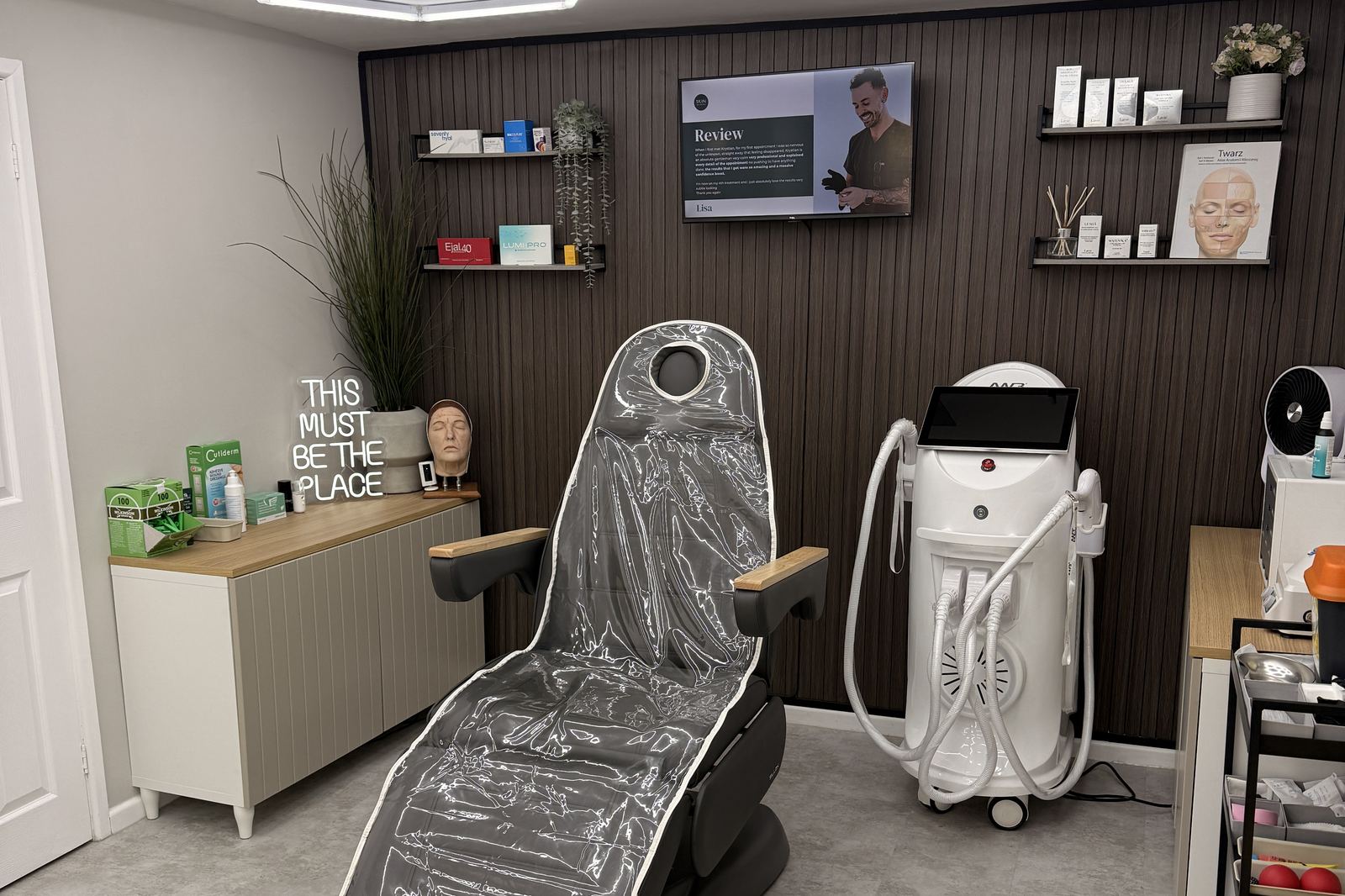
- Sessions required
- 6 to 8, spaced 4 to 8 weeks
- Hair reduction
- Long-term reduction over a course
- Session length
- 15 to 60 minutes depending on area
- Downtime
- None; mild redness 24 hours
Laser hair removal uses targeted light energy to heat hair follicles in their active growth phase, impairing the follicle's ability to produce future hair. Because only follicles in the active phase are affected at any one session, a course of six to eight treatments is required to catch all follicles across their growth cycles, producing a long-term reduction in hair growth. Results vary with skin and hair type. Sessions range from fifteen minutes for a small facial area to approximately sixty minutes for the full legs. There is no recovery period; mild redness for up to twenty-four hours is the typical response. Treatment is available by appointment at Skin Aesthetics by Krystian, 15 Old Bridge Cl, Bursledon, Southampton SO31 8AX.
Pricing and booking are on Fresha, kept in one place so it is always current.
Selective heat, delivered to the follicle.
Laser hair removal operates on the principle of selective photothermolysis. A beam of light at a specific wavelength is absorbed by the melanin pigment in the hair shaft and root, converting to heat at the point of absorption. When that heat is sufficient, it damages the germinal cells of the follicle that are responsible for producing new hair, without causing significant damage to the surrounding skin. The result, applied across a course of sessions timed to the hair growth cycle, is a gradual, long-lasting reduction in hair density.
The growth cycle is what determines the course structure. At any given moment, hair follicles across a body area are distributed across three phases: active growth (anagen), transition (catagen), and rest (telogen). Laser energy is only effective on follicles in the anagen phase, because that is when the melanin-rich hair shaft is present and connected to the follicle. A single session captures the anagen follicles at that point in time; sessions spaced four to eight weeks apart progressively address follicles as they cycle into the active phase.
Skin tone, hair colour, and device selection are not interchangeable variables.
The safety and efficacy of laser hair removal depend significantly on the contrast between hair pigment and skin tone. Darker hair on lighter skin produces the best conditions for selective absorption: the laser energy targets melanin in the hair while the surrounding skin absorbs relatively little. On darker skin tones, longer wavelength devices are used to reduce the risk of epidermal absorption. White, grey, or very fine blonde hair contains insufficient melanin to absorb laser energy effectively; these hair types do not respond well to laser treatment, and Krystian will be direct about this at consultation rather than proceeding with a course unlikely to produce the expected result.
Laser hair removal is appropriate for any adult patient with hair in an area they would like to reduce, provided skin tone and hair colour present conditions where safe and effective treatment can be delivered. It is not a single-session solution; the commitment is to a course, and maintenance sessions may be required for some areas annually as dormant follicles are occasionally stimulated by hormonal changes over time.
Three things that affect the result.
Laser hair removal produces reliable results, but those results depend on the variables Krystian assesses before beginning.
Hair colour and skin tone
Laser hair removal works on the basis of pigment contrast. Very light, white, or grey hair does not respond, and darker skin tones require specific device settings to avoid epidermal damage. Krystian assesses this at the patch test appointment and will advise honestly if treatment is unlikely to produce the expected outcome.
Sun exposure and self-tan
Active tan, whether from the sun or a bottle, changes the baseline skin tone and increases the risk of the laser energy being absorbed superficially rather than at the follicle. Sun-exposed or fake-tanned skin cannot be safely treated; the course must be planned around this.
Hormonal hair growth
Areas affected by hormonal hair growth, particularly the face and jawline in women with conditions such as polycystic ovary syndrome, may require more sessions and periodic maintenance. The laser addresses existing follicles; it does not prevent hormonally stimulated follicles from activating in the future.
From patch test to final session.
The course follows a defined structure. Each session builds on the one before.
Patch test
A patch test in an inconspicuous area of the treatment zone is performed and reviewed at least forty-eight hours before the first full session. This confirms the device settings are appropriate for your skin and hair type and that there is no adverse reaction.
First treatment
Settings confirmed from the patch test are applied to the full treatment area. The handpiece delivers pulses of laser energy in methodical passes across the area. A cooling mechanism protects the surface skin throughout.
Progressive course
Each session is timed to the growth cycle of the area being treated, typically four to six weeks for facial areas and six to eight weeks for body areas. Hair density reduces progressively through the course.
Assessment
After six sessions, the treated area is reviewed. Most patients see eighty to ninety per cent reduction at this point. Further sessions are planned where residual hair remains or where response has been partial.
The honest version.
The questions every patient is too polite to ask out loud. Read at your pace.
Does it hurt?
Most patients describe the sensation as a brief, sharp snap, similar to a rubber band against the skin, at each pulse. Modern laser devices include cooling systems that reduce this significantly. Facial areas and areas with denser hair tend to produce a stronger sensation. Topical anaesthetic can be used for particularly sensitive patients on request.
How many sessions will I need?
Six to eight sessions is the standard course for most areas and most patients. The actual number depends on the area treated, hair density, skin tone, and how consistently sessions are timed to the growth cycle. Hormonal hair growth areas, particularly the face, may require additional sessions and occasional maintenance treatments.
How long do the results last?
Follicles that are treated in their growth phase are disabled, so hair density reduces gradually across a full course and the result is long-lasting for most patients. Follicles that were resting during your course can occasionally be woken by hormonal shifts, pregnancy, or medication changes in the future. An occasional single maintenance session deals with this for most patients.
Can it be done on darker skin?
Yes, with appropriate device selection. Longer wavelength lasers reduce the risk of epidermal damage in darker Fitzpatrick skin types by targeting the follicle at greater depth with less superficial absorption. Krystian assesses skin tone carefully at the patch test and adjusts settings accordingly. He will also advise where treatment is not appropriate for a particular combination of skin tone and hair type.
Where can I see the pricing?
Pricing and booking are on Fresha. The reserve-your-consultation button at the top of this page takes you directly there.
What we tell you before we begin.
- Redness and swellingMild redness and follicular swelling in the treated area is the expected immediate response and typically resolves within twenty-four hours.
- Pigmentation changeTemporary darkening or lightening of the skin in the treated area can occur, particularly following sun exposure near the treatment date; this is usually temporary and resolves over weeks to months.
- BlisteringRare; most commonly associated with treatment on recently tanned or self-tanned skin where device settings have not been adjusted appropriately.
- Paradoxical hair stimulationVery occasionally, laser treatment stimulates finer, dormant hairs in the surrounding area rather than inhibiting them; this is more common at lower fluences and is managed by adjusting device settings.
- ExclusionsPregnancy, breastfeeding, active skin infection in the treatment area, use of photosensitising medications, recent significant sun exposure or fake tan, and hair types with insufficient melanin to respond to laser energy (white, grey, very light blonde).
A patch test before the first full session is not optional; it is how Krystian confirms the right settings for your skin and identifies any adverse response before a full area is treated.
Reserve your consultation.
If you are at the point where you want a solution to body hair that does not require repeating every few weeks, a consultation with Krystian is where to start. The patch test and first session can usually be completed within the same week.